Cataract Laser Surgery Cost in Delhi
Pan - India Delhiahmedabadamritsarbangalorebhubaneswarchandigarhchennaifaridabadghaziabadgreater noidagurgaonguwahatihowrahhyderabadindorejabalpurjaipurjamshedpurjodhpurkanpurkolkatalucknowmumbaimysorenagpurnavi mumbainoidapatnapuneraipurrajkotsuratthanevadodaravijayawada


 WhatsApp Expert
The laser cataract surgery cost in Delhi starts at ₹42,000 per eye, with an average estimated cost of ₹55,000 per eye. Depending on the hospital, intraocular lens (IOL) type, surgical technology and patient's eye condition, the cost may go up to ₹1,40,000 per eye.
For patients choosing conventional cataract surgery, packages with monofocal IOLs generally range from ₹30,000 to ₹50,000 per eye. Laser-assisted cataract surgery may cost more because it uses advanced laser technology for certain steps of the procedure.
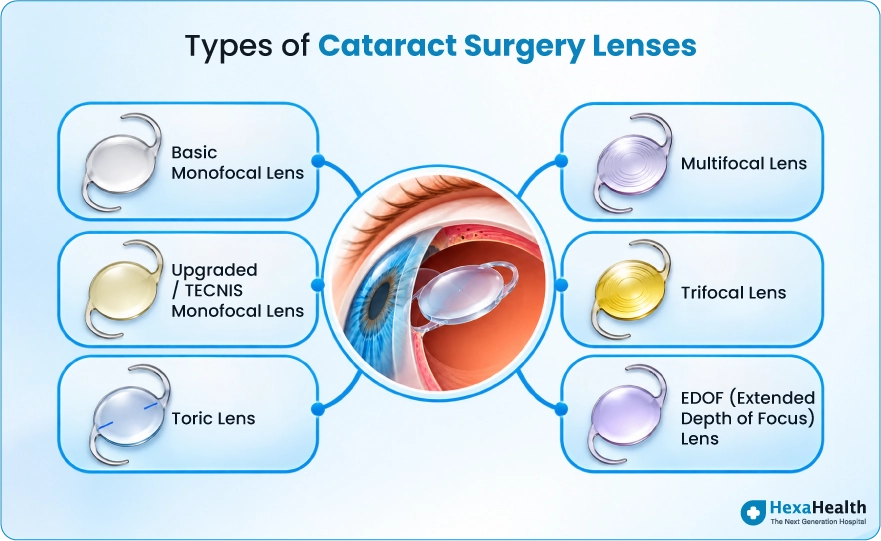
The cost of laser cataract surgery in Delhi also varies based on the lens selected, including monofocal, toric, multifocal, trifocal and extended depth of focus (EDOF) lenses. Other cataract treatment options available in Delhi include phacoemulsification (Phaco), micro-incision cataract surgery (MICS) and small-incision cataract surgery (SICS).
This guide provides a detailed breakdown of laser cataract surgery prices in Delhi, including procedure-wise costs, IOL lens options, factors affecting treatment expenses, hospitals, insurance coverage, recovery and financing options to help patients make informed decisions.

Estimated Laser Cataract Surgery Cost in Delhi
Laser cataract surgery uses advanced technology during selected surgical steps. The procedure requires specialised equipment and trained ophthalmologists. Final charges depend on hospital facilities and treatment requirements.
The table below shows estimated laser cataract surgery costs.
Cost Category | Estimated Price Per Eye |
|---|---|
Minimum cost | ₹42,000 |
Average cost | ₹55,000 |
Maximum cost | ₹1,40,000 |
These figures represent indicative HexaHealth estimates. Patients should request an itemised hospital quotation before surgery.
Cataract Surgery Cost Breakdown by Lens Type
The cataract surgery cost with lens depends on IOL selection. An intraocular lens replaces the cloudy natural lens during surgery.
Different lenses address different visual requirements. Some correct vision at one distance. Others support astigmatism correction or multiple viewing distances.
Cataract Surgery Package Cost by Lens Type
Monofocal lenses offer an economical option for cataract surgery. Premium lenses provide additional vision-correction features for suitable patients.
The table compares estimated surgery packages and their main benefits.
Lens Type | Estimated Surgery Package Per Eye | Main Benefit |
|---|---|---|
Monofocal IOL | ₹30,000–₹50,000 | Corrects vision at one distance |
Toric IOL | ₹44,000–₹90,000 | Corrects corneal astigmatism |
Multifocal IOL | ₹50,000–₹70,000 | Supports vision at multiple distances |
Trifocal IOL | ₹70,000–₹1,50,000 | Supports near, intermediate and distance vision |
EDOF IOL | ₹55,000–₹1,00,000+ | Extends the range of clear vision |
Note: These estimates represent complete surgery packages, not standalone lens prices. Package inclusions and charges vary across hospitals.
Basic Monofocal Lens correct vision at one selected distance. Most patients prefer correction for distance vision. Reading glasses may still be necessary after surgery. These lenses suit patients seeking economical vision correction.
Upgraded or TECNIS Monofocal Lens belong to Johnson & Johnson Vision's range. Different models offer distinct optical characteristics and features. The ophthalmologist evaluates eye measurements before recommending a suitable model. Visual outcomes depend on individual eye health.
Toric Lens correct corneal astigmatism during cataract surgery. They may reduce dependence on distance spectacles. The required cylindrical power determines the appropriate lens model. Detailed corneal measurements help surgeons plan accurate lens placement.
Multifocal Lens support vision at more than one distance. They may reduce dependence on reading and distance glasses. However, some patients experience glare or nighttime halos. Certain retinal or corneal conditions may limit suitability.
Trifocal Lenses support clear vision at three main distances. Near vision helps with reading books and using mobile phones. Intermediate vision supports computer work and everyday activities. Distance vision helps with driving and recognising distant objects. These lenses may reduce dependence on spectacles. However, retinal and corneal health influence suitability.
EDOF (Extended Depth of Focus) Lens extend the range of clear vision. They particularly support distance and intermediate activities. Some patients may still need glasses for small print.
Read More: Best Lens for Cataract Surgery
Cataract Surgery Cost by Surgical Technique
The cataract surgery cost in Delhi also depends on the surgical technique. Surgeons use different methods to remove the cloudy lens.
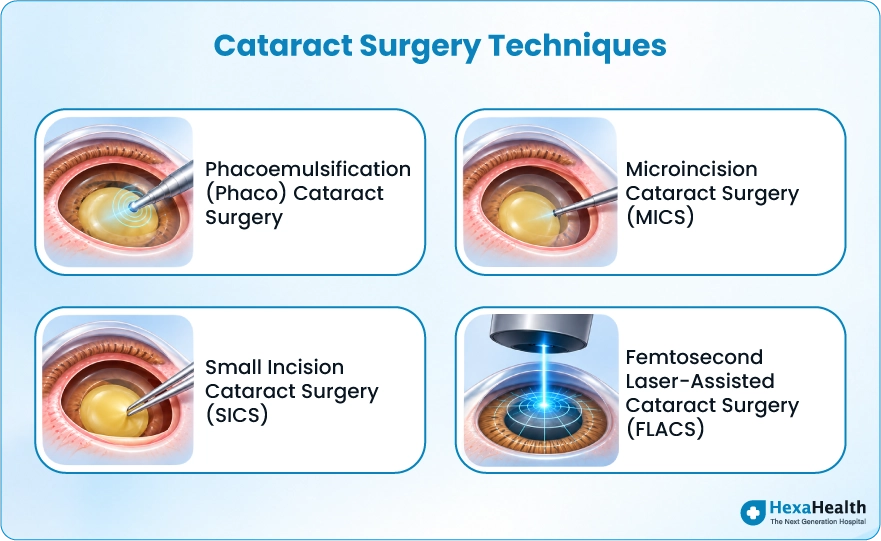
Common approaches include Phaco, MICS, SICS and FLACS. The recommended technique depends on individual clinical requirements.
Technique | Estimated Cost Per Eye | Surgical Method |
|---|---|---|
Phaco | ₹15,000–₹50,000 | Ultrasound breaks the cloudy lens |
MICS | ₹25,000–₹65,000 | Phaco through smaller incisions |
SICS | ₹10,000–₹40,000 | Manual lens removal |
FLACS | ₹42,000–₹1,40,000 | Laser assists selected surgical steps |
Note: These are indicative technique-based estimates. Final surgery package costs depend on the selected intraocular lens, hospital facilities and additional treatment requirements. Patients should confirm whether the quoted amount includes the IOL.
- Phaco Cataract Surgery: Phacoemulsification uses ultrasound energy to break the cloudy lens. The surgeon removes the fragments through a small incision.
An artificial intraocular lens replaces the natural lens. This technique suits many routine cataract cases. Phaco generally allows early recovery after uncomplicated surgery. - Microincision Cataract Surgery (MICS) uses specialised instruments through smaller surgical incisions. Smaller incisions may reduce surgically induced astigmatism.
The surgeon determines suitability through detailed eye examinations. Recovery depends on the patient's overall eye health. - In Small Incision Cataract Surgery (SICS) the surgeon manually removes the cloudy natural lens. This technique may suit patients with dense cataracts.
It can also provide an economical surgical approach. Recovery requirements depend on cataract complexity and individual healing. - Femtosecond Laser-Assisted Cataract Surgery (FLACS) or Laser Cataract Surgery uses laser technology during selected surgical steps. These steps may include corneal incisions and capsule opening. The laser can also assist with lens fragmentation.
The surgeon completes lens removal and intraocular lens implantation. Laser assistance does not guarantee better outcomes for every patient. The ophthalmologist recommends FLACS based on clinical suitability.
You can also view: Laser cataract surgery cost in India
Estimated Motiyabind Operation Cost at Top Hospitals in Delhi
The cost of motiyabind surgery in Delhi varies depending on the hospital, surgical technique, intraocular lens (IOL) and treatment package. Laser-assisted procedures and premium lenses generally cost more than conventional cataract surgery.
The following table provides illustrative, hospital-wise budgeting ranges per eye.
Hospital | Estimated Cost Range (Per Eye) |
|---|---|
₹55,000–₹1,30,000 | |
₹60,000–₹1,40,000 | |
₹50,000–₹1,20,000 | |
₹55,000–₹1,40,000 | |
₹45,000–₹1,15,000 | |
₹55,000–₹1,35,000 | |
₹50,000–₹1,25,000 | |
₹45,000–₹1,20,000 | |
₹42,000–₹1,05,000 | |
₹50,000–₹1,30,000 | |
₹45,000–₹1,10,000 | |
₹50,000–₹1,25,000 | |
₹55,000–₹1,30,000 | |
₹45,000–₹1,15,000 | |
₹55,000–₹1,35,000 | |
₹50,000–₹1,30,000 | |
₹45,000–₹1,20,000 | |
₹55,000–₹1,40,000 | |
₹45,000–₹1,15,000 | |
₹45,000–₹1,25,000 | |
₹50,000–₹1,30,000 | |
₹50,000–₹1,25,000 | |
₹42,000–₹1,10,000 | |
| Manipal Hospital, Dwarka | ₹55,000–₹1,40,000 |
| Dharamshila Narayana Superspeciality Hospital, Vasundhara Enclave | ₹60,000–₹1,40,000 |
Note: These hospital-wise figures are estimated budgeting ranges, not verified hospital quotations. Final costs depend on the procedure, IOL selection, diagnostic tests and package inclusions. Connect with HexaHealth for final cost.
Cataract Surgery Package Inclusions, Exclusions and Total Cost
The total cataract surgery cost includes several hospital charges. Some hospitals provide bundled treatment packages. Other hospitals charge separately for investigations and medicines. Patients should review every component before booking.
What is Included in a Cataract Surgery Package?
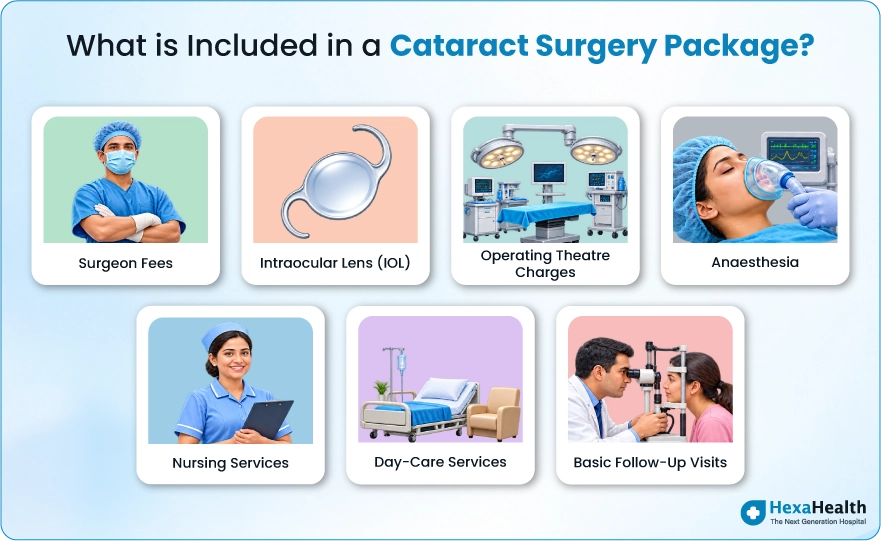
Cataract surgery packages generally include surgeon fees and operating theatre charges. They may also include the selected intraocular lens. Anaesthesia, nursing and basic follow-up may be covered.
However, package inclusions vary across hospitals. Patients should verify the complete list before booking.
The following table explains common package components.
Component | Details |
|---|---|
Surgeon fees | Charges for performing the procedure |
Intraocular lens | Selected IOL, subject to package terms |
Operating theatre | OT facilities, equipment and standard consumables |
Anaesthesia | Applicable topical or local anaesthesia |
Nursing services | Assistance during surgery and recovery |
Day-care services | Same-day hospital facilities |
Basic follow-up | Included only under applicable package terms |
What May Be Excluded?
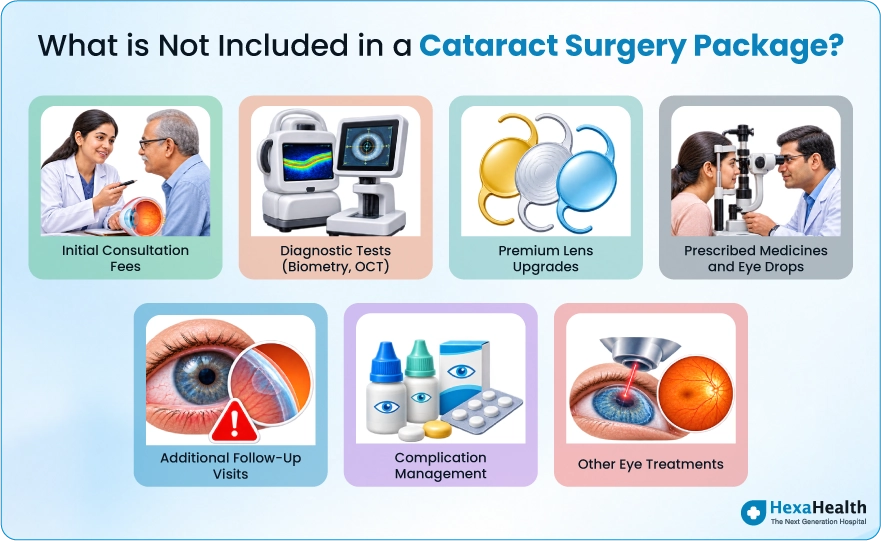
Cataract surgery packages may exclude diagnostic tests and medicines. Premium lens upgrades may also attract additional charges. Extra follow-up visits can increase the final bill.
Patients should check these exclusions before confirming surgery. An itemised quotation helps avoid unexpected expenses.
The following table lists common additional charges.
Expense | Details |
|---|---|
Initial consultation | May require separate payment |
Diagnostic investigations | Biometry, OCT and retinal examinations |
Premium lens upgrade | Additional charges for advanced lenses |
Medicines | Prescribed eye drops and medications |
Extra follow-ups | Visits beyond package limits |
Complication management | Additional treatment when required |
Other eye procedures | Separate retinal or glaucoma treatment |
How is Total Cataract Surgery Cost Calculated?
The total cataract surgery cost includes the package and additional charges. Insurance benefits may reduce the final payable amount.
Total Cost = Surgery Package + Additional Charges − Insurance Payment
For example, a surgery package may cost ₹35,000. Investigations may add ₹3,000. Medicines and consumables may add another ₹2,000.
The total becomes ₹40,000 before insurance deductions.
Expense | Estimated Amount |
|---|---|
Surgery package with monofocal lens | ₹35,000 |
Pre-operative investigations | ₹3,000 |
Medicines and additional consumables | ₹2,000 |
Total before insurance | ₹40,000 |
This example does not represent an actual hospital quotation. Patients should obtain an itemised estimate.
Factors Affecting Cataract Surgery Cost in Delhi
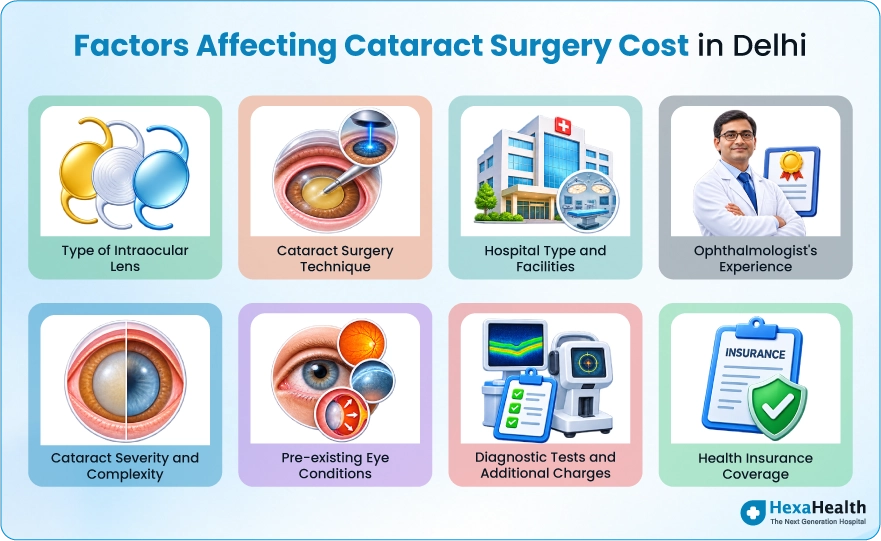
The cataract surgery cost in Delhi depends on several factors. These include lens selection, surgical technique and hospital facilities. Understanding these factors helps patients estimate their treatment expenses.
Type of Intraocular Lens (IOL): The selected lens significantly influences the overall surgery cost. Basic monofocal lenses are generally more affordable. Toric lenses correct astigmatism and usually cost more. Multifocal, trifocal and EDOF lenses offer advanced vision correction.
Cataract Surgery Technique: Different surgical techniques have different equipment and procedural costs. SICS and conventional Phaco are generally more economical. MICS involves specialised instruments and smaller incisions. FLACS uses laser technology, which increases treatment expenses.
Hospital Type and Facilities: Hospital infrastructure and available technology influence treatment pricing. Government hospitals may offer subsidised cataract surgery. Private hospitals have different package rates and facilities. Advanced equipment and premium services may increase charges.
Ophthalmologist's Experience: Surgeon fees may vary with experience and clinical expertise. Specialists performing complex procedures may have different consultation charges. Patients should consider qualifications alongside treatment costs.
Cataract Severity and Complexity: Advanced cataracts may require additional surgical planning. Dense cataracts can make lens removal more challenging. Existing complications may also affect the recommended technique. These requirements can influence the final quotation.
Pre-existing Eye Conditions: Glaucoma, retinal disorders and corneal problems may affect treatment planning. Patients may require specialised investigations before surgery. Some conditions also require additional treatment or monitoring. These services can increase overall expenses.
Diagnostic Tests and Additional Charges: Preoperative examinations help determine lens power and surgical suitability. Tests may include biometry, OCT and corneal measurements. Some hospitals charge separately for these investigations. Medicines and follow-up visits may also involve additional expenses.
Health Insurance Coverage: Insurance coverage affects the patient's final out-of-pocket payment. Policies may include waiting periods and cataract treatment sub-limits. Premium lenses and laser-assisted procedures may have coverage restrictions. Patients should verify benefits before scheduling surgery.
Note: Patients should compare itemised quotations rather than package prices alone. The most suitable treatment depends on individual clinical requirements.
Who Needs Cataract Surgery and How is Suitability Decided?
Cataract surgery restores vision affected by clouding of the natural lens. Doctors recommend surgery when cataracts interfere with everyday activities. Early cataracts may only require monitoring.
Symptoms That May Require Cataract Surgery
Common cataract symptoms include:
Blurred or cloudy vision
Increased sensitivity to bright lights
Glare or halos around headlights
Difficulty driving at night
Colours appearing faded or yellowish
Frequent changes in spectacle power
Difficulty reading or recognising faces
Reduced vision despite updated spectacles
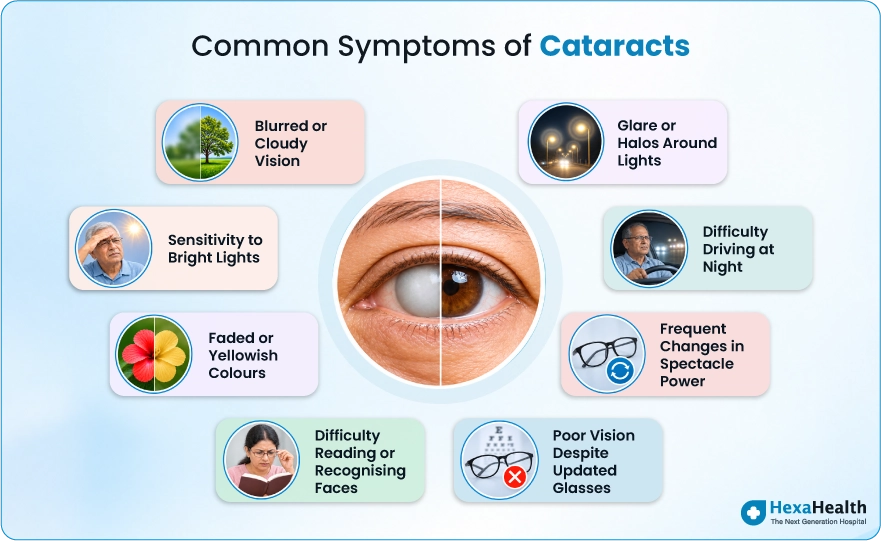
Patients experiencing these symptoms should consult an ophthalmologist.
How is Cataract Surgery Suitability Decided?
The ophthalmologist examines cataract severity and overall eye health. Important factors include:
Visual acuity and cataract severity
Corneal health and astigmatism
Retinal and macular condition
Eye pressure and existing diseases
Intraocular lens power measurements
Daily activities and visual expectations
Overall medical condition
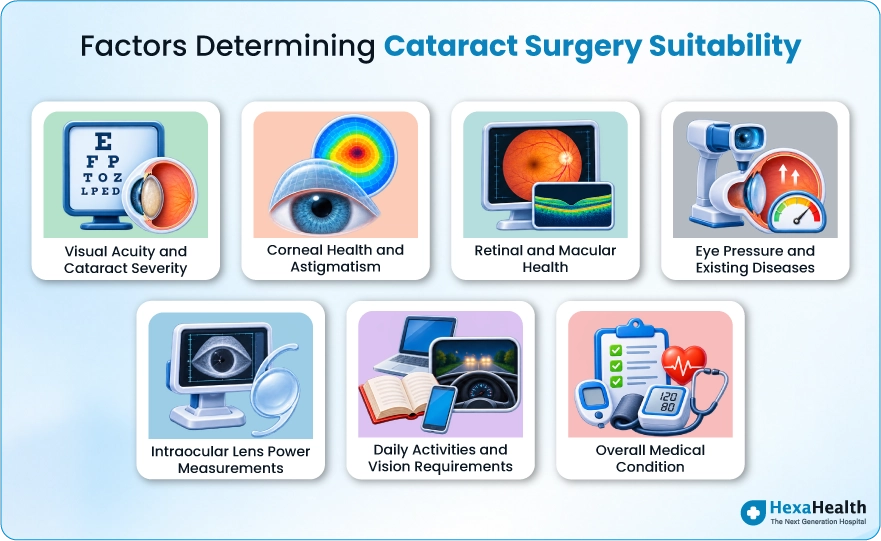
The surgeon recommends treatment based on these findings.
Recovery After Cataract Surgery
Cataract surgery recovery time varies between patients. Many patients notice improved vision within several days. Complete healing may take four to six weeks.
Recovery depends on surgical complexity and existing eye conditions. The table outlines typical progress after uncomplicated surgery.
| Recovery Period | Expected Progress |
|---|---|
| First 24 hours | Mild irritation, watering and blurred vision |
| Days 2–3 | Vision may improve; light activities often resume |
| First week | Continued healing and follow-up examination |
| Weeks 2–3 | Further improvement in comfort and vision |
| Weeks 4–6 | Healing and visual stabilisation in many cases |
Recovery may take longer with diabetes or retinal disease.
Precautions After Cataract Surgery
Patients should follow their surgeon's instructions carefully. Following are the precautions after motiyabind surgery:
Use prescribed eye drops regularly
Avoid rubbing the operated eye
Wear the recommended protective eye shield
Avoid swimming until medically cleared
Prevent dirty water from entering the eye
Avoid strenuous activities until permitted
Attend all scheduled follow-up appointments
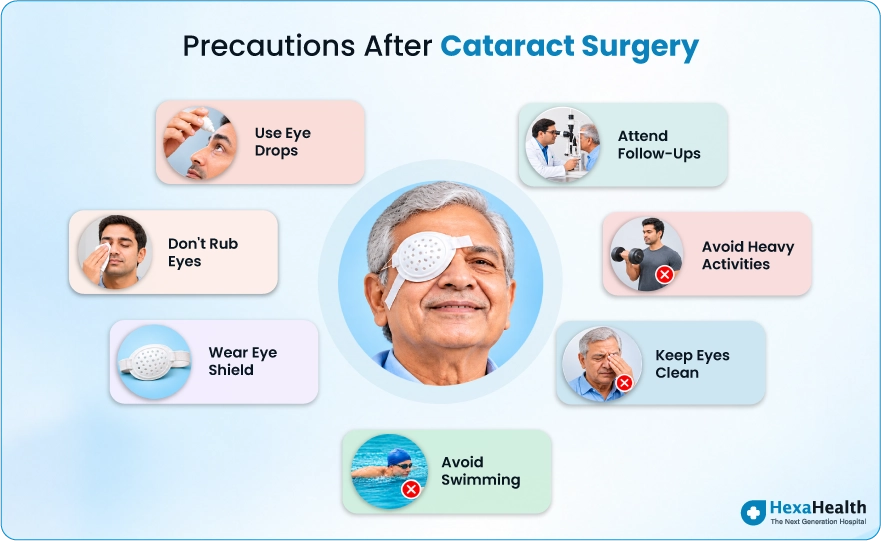
Severe pain or sudden vision loss requires urgent assessment. Increasing redness also requires prompt medical attention.
To get more information: Laser cataract surgery - Procedure, Types, Recovery Time
Cataract Surgery Cost in Government Hospitals in Delhi
Government hospitals may provide cataract surgery at subsidised rates. Eligibility, lens availability and waiting periods vary across institutions.
Some patients may qualify for government healthcare schemes. Patients should contact hospitals directly for updated pricing.
Cataract Surgery Cost in AIIMS Delhi
The cataract surgery cost in AIIMS Delhi varies by patient category. Charges depend on hospital tariffs and lens selection. Eligible patients may receive subsidised treatment. Additional investigations may involve separate charges.
Patients should confirm current prices directly with AIIMS.
Cataract Surgery Insurance Coverage in Delhi
Health insurance may cover medically necessary cataract surgery in Delhi. Coverage depends on policy terms, waiting periods and treatment limits.
Premium lenses and laser-assisted procedures may have additional restrictions. HexaHealth can assist with insurance verification and claim coordination.
Is Laser Cataract Surgery Covered Under Medical Insurance in Delhi?
Many health insurance policies cover eligible cataract procedures. Standard Phaco and MICS techniques may qualify for coverage. FLACS coverage depends on specific policy conditions. Some plans restrict reimbursement for premium intraocular lenses.
Patients should confirm their approved treatment and lens allowances.
Government Health Insurance Schemes for Cataract Surgery
Eligible patients may receive treatment through government healthcare schemes.
- Pradhan Mantri Jan Arogya Yojana (PM-JAY): Provides healthcare benefits to eligible families. Cataract treatment depends on approved packages and hospital availability.
- Central Government Health Scheme (CGHS): Supports eligible central government beneficiaries. Coverage follows applicable scheme rates and treatment conditions.
- Ex-Servicemen Contributory Health Scheme (ECHS): Supports eligible ex-servicemen and dependants. Treatment follows authorisation and hospital network requirements.
Scheme eligibility and benefits should be confirmed before surgery.
List of Medical Insurance Companies for Cataract Surgery in Delhi
Several insurers offer policies covering eligible cataract procedures. Actual benefits depend on the selected plan.
Note: Insurer listings do not guarantee cataract surgery coverage.
Does Insurance Cover Premium Cataract Lenses?
Standard monofocal lenses may qualify under approved treatment packages. Premium lens upgrades may require additional payments. These include toric, multifocal, trifocal and EDOF lenses. FLACS upgrades may also have coverage restrictions.
What Should Patients Check Before Surgery?
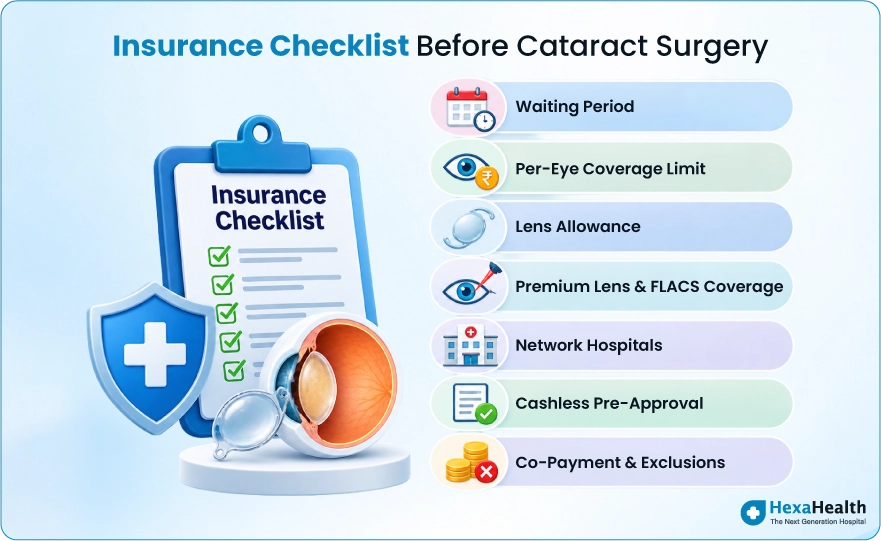
Patients should verify these insurance conditions:
Cataract surgery waiting period
Per-eye treatment sub-limit
Approved lens allowance
Premium lens and FLACS coverage
Network hospital availability
Cashless pre-authorisation requirements
Co-payment and policy exclusions
Written approval helps clarify expected out-of-pocket expenses.
Cashless Claim for Laser Cataract Surgery in Delhi
Cashless cataract surgery is available to eligible patients at network hospitals. The insurer settles approved expenses directly with the hospital.
The process generally involves these steps:
Select Hospital: Choose an eligible network hospital.
Verify Policy: Confirm coverage and treatment limits.
Request Approval: Submit documents for pre-authorisation.
Undergo Surgery: Complete treatment after receiving the necessary approval.
Settle Claim: The insurer pays approved hospital charges.
Patients must pay non-covered expenses and applicable co-payments. HexaHealth can assist with policy verification and claim coordination.
Reimbursement Claim for Cataract Surgery in Delhi
Reimbursement requires patients to pay hospital charges initially. They can then claim eligible expenses from their insurer.
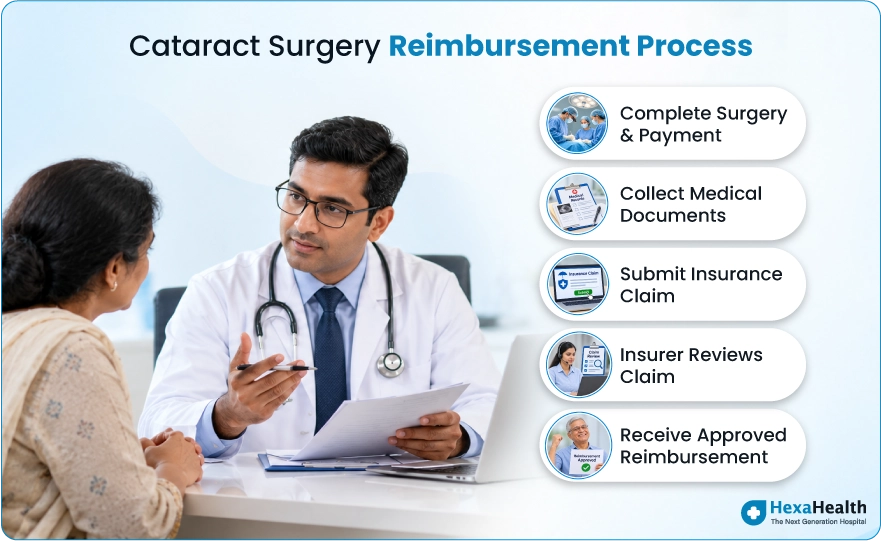
The process generally includes:
Complete Surgery: Undergo treatment and pay hospital charges.
Collect Documents: Obtain invoices, prescriptions and discharge records.
Submit Claim: Send required documents to the insurer.
Claim Review: The insurer checks policy eligibility.
Receive Reimbursement: Approved expenses are reimbursed under policy terms.
Patients should retain original documents and follow submission deadlines. HexaHealth can assist with understanding claim requirements.
Medical Loan for Laser Cataract Surgery in Delhi
Medical loans may help patients finance cataract surgery expenses. Financing can support treatment when insurance or savings are insufficient. Eligible expenses may include surgeon fees and hospital charges. Diagnostic tests may also qualify under certain financing arrangements.
Banks and lending institutions provide medical financing options. Approval depends on eligibility and lender requirements.
Potential Benefits of Medical Loans
Depending on the lender, benefits may include:
Faster application and approval processes
Unsecured financing without collateral
Flexible monthly repayment instalments
Promotional interest rates for eligible applicants
Reduced or waived processing fees under selected offers
Note: Instant approval and zero-interest financing are not guaranteed. Patients should review interest rates and total repayment costs.
HexaHealth can help patients explore available financing options.
Cataract Surgery Specialists in Delhi
Delhi offers ophthalmologists experienced in different cataract surgery techniques. Some specialists also perform premium intraocular lens implantation.
Patients should consider clinical expertise and consultation availability.
Doctor Name | Associated Hospital | Relevant Clinical Expertise |
|---|---|---|
The Sight Avenue, Greater Kailash I | Ophthalmology, cataract surgery, phacoemulsification | |
IClinix Advanced Eye Care, Lajpat Nagar IV | Ophthalmology, anterior segment and cornea | |
Dr Agarwals Eye Hospital, South Extension II | Cornea, refractive and anterior-segment surgery | |
Netram Eye Foundation, Greater Kailash | Ophthalmology, cataract surgery | |
Sharp Sight Eye Hospital, Rajendra Nagar | Cataract surgery, phacoemulsification, premium IOL implantation | |
The Healing Touch Super Speciality Eye Care, Janakpuri | Ophthalmology, eye surgery | |
Dr Agarwals Eye Hospital, Rajouri Garden | Ophthalmology, neuro-ophthalmology, paediatric ophthalmology | |
Centre for Sight Eye Hospital, Vikaspuri | Cataract surgery; branch affiliation requires reconfirmation | |
Sharp Sight Eye Hospital, R K Puram | Cataract surgery, glaucoma, phacoemulsification |
Note: Hospital affiliations and consultation availability require confirmation.
Locations We Serve for Laser Cataract Surgery in Delhi
HexaHealth helps patients explore cataract treatment across Delhi. Service availability depends on nearby hospitals and ophthalmologists.
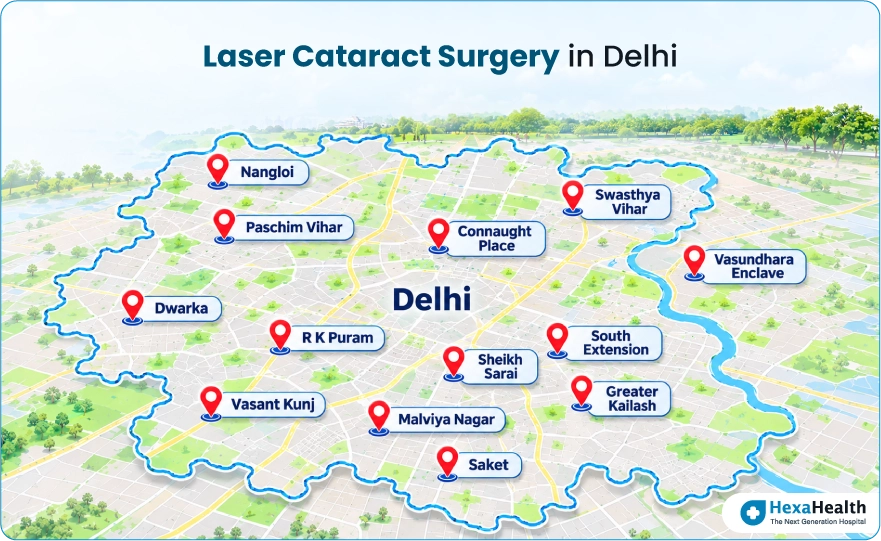
Our service areas include:
East Delhi: Preet Vihar, Swasthya Vihar, Shahdara, Mayur Vihar and Laxmi Nagar
West Delhi: Paschim Vihar, Janakpuri, Punjabi Bagh, Nangloi and Rajouri Garden
South Delhi: Saket, Greater Kailash, Malviya Nagar, Sheikh Sarai and South Extension
North Delhi: Rohini, Pitampura, Model Town, Shalimar Bagh and Civil Lines
South West Delhi: Dwarka, Vasant Kunj, Vasant Vihar, R K Puram and Palam
Central Delhi: Karol Bagh, Patel Nagar, Connaught Place and Rajendra Place
Patients can compare treatment options near their preferred locations. Laser surgery availability should be confirmed before booking.
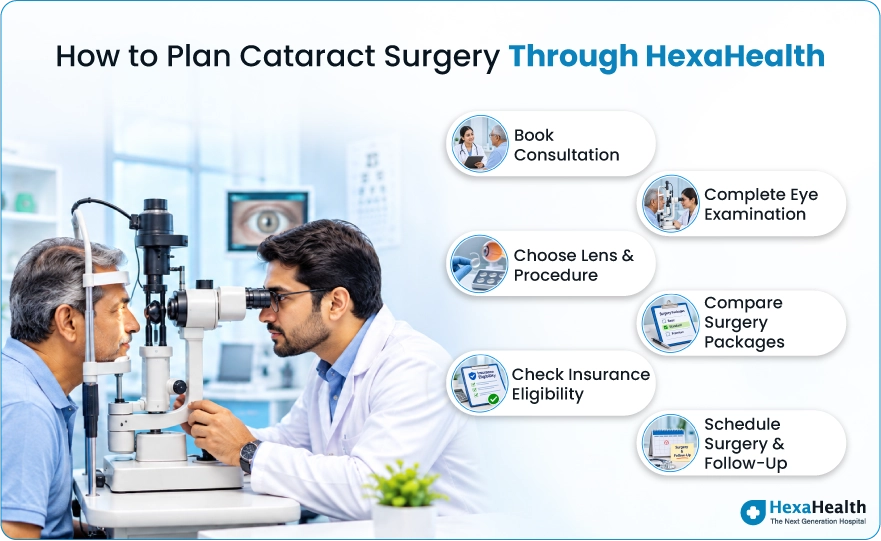
How to Plan Cataract Surgery in Delhi Through HexaHealth
HexaHealth helps patients explore cataract surgery options in Delhi. The process involves consultation, treatment planning and package comparison.
Step 1: Book an Ophthalmologist ConsultationContact HexaHealth to discuss cataract symptoms and treatment preferences. The team can help coordinate a consultation.
Step 2: Complete the Eye ExaminationThe ophthalmologist evaluates cataract severity and overall eye health. Diagnostic tests help determine surgical suitability.
Step 3: Choose the Lens and Surgical TechniqueThe doctor recommends suitable lens and procedure options. Patients can discuss benefits and possible limitations.
Step 4: Compare Surgery PackagesHexaHealth can help patients understand available hospital quotations. Confirm lens charges, investigations and additional expenses.
Step 5: Check Insurance EligibilityPatients can request assistance with insurance verification. Cashless eligibility depends on policy and hospital network.
Step 6: Schedule Surgery and Follow-UpSurgery is scheduled after confirming treatment details. Patients receive instructions for preparation and recovery.
Your Journey to Clearer Vision Starts with HexaHealth
The cataract surgery cost in Delhi varies by lens and procedure. Hospital facilities and individual treatment needs also influence pricing. Choosing suitable treatment matters more than selecting the cheapest package.
HexaHealth helps patients explore cataract surgery options in Delhi. Compare hospitals, experienced ophthalmologists and available treatment packages. Our team can also assist with insurance and financing queries.
Ready to see the world more clearly? Connect with HexaHealth to explore suitable cataract surgery options.
Medical Disclaimer: This content is for informational purposes only. It does not replace professional medical advice or diagnosis. Surgery costs are indicative and may vary across hospitals. Insurance coverage depends on individual policy terms and eligibility. Consult a qualified ophthalmologist before making treatment decisions.


Laser Cataract Surgery Cost Videos


How Much Does Cataract Surgery Cost in India? || HexaHealth expert Dr. Payal Pandit

Best Doctors for Laser Cataract Surgery in Delhi (10)




Ophthalmology,Anterior Segment/Cornea Ophthal...

42+ Years
Experience

96%
Recommended

Top Hospitals for Laser Cataract Surgery in Delhi (9)



 West Patel Nagar, Delhi





Frequently Asked Questions (FAQ)
What is the cataract surgery cost in Delhi?
The cataract surgery cost in Delhi starts around ₹30,000 per eye for monofocal IOL packages. Premium packages with advanced lenses may cost up to ₹1,50,000 per eye or more, depending on the surgical technique, lens selection and hospital facilities.
What is the cataract operation cost in Delhi per eye?
The cataract surgery cost per eye in Delhi varies by lens type and procedure. Monofocal IOL packages generally cost ₹30,000–₹50,000 per eye. Multifocal packages range from ₹50,000–₹70,000, while trifocal packages cost ₹70,000–₹1,50,000 per eye.
What is the minimum, average and maximum laser cataract surgery cost in Delhi?
The minimum laser cataract surgery cost in Delhi is ₹42,000 per eye. The average cost is ₹55,000 per eye. The maximum estimated cost is ₹1,40,000 per eye.
What is the monofocal lens cost in Delhi?
The monofocal lens cost in Delhi depends on the selected surgery package. Monofocal IOL surgery packages range from ₹30,000–₹50,000 per eye.
These lenses correct vision at one selected distance, and patients may still need reading glasses after surgery. Standalone lens prices may differ.
How much does a TECNIS monofocal lens cost?
The TECNIS monofocal lens cost in Delhi depends on the specific lens model and hospital. General monofocal IOL surgery packages range from ₹30,000–₹50,000 per eye. TECNIS-specific package prices should be confirmed with the hospital, as they may vary by model and package inclusions.
What is the toric lens cost for cataract surgery?
The toric lens cost in Delhi varies by lens specifications. Toric surgery packages range from ₹44,000–₹90,000 per eye. These lenses correct corneal astigmatism during cataract surgery.
How much does a multifocal or trifocal lens cost?
The multifocal lens cost in Delhi ranges from ₹50,000–₹70,000 per eye for cataract surgery packages. The trifocal lens cost in Delhi ranges from ₹70,000–₹1,50,000 per eye. Both lens types support vision at multiple distances and may reduce dependence on spectacles.
What is the FLACS cataract surgery cost in Delhi?
The FLACS cataract surgery cost in Delhi ranges from ₹42,000–₹1,40,000 per eye. FLACS uses femtosecond laser technology during selected surgical steps. Final charges depend on lens selection, hospital facilities and individual treatment requirements. Premium packages may cost more.
Is Phaco cheaper than laser cataract surgery?
Yes, conventional Phaco generally costs less than femtosecond laser-assisted cataract surgery when comparing similar lens options. The phaco cataract surgery cost in Delhi varies by lens selection, hospital and package inclusions. Monofocal IOL surgery packages are estimated at ₹30,000–₹50,000 per eye. FLACS typically involves additional equipment and procedural expenses.
What is the MICS cataract surgery cost in Delhi?
The MICS cataract surgery cost in Delhi ranges from ₹25,000–₹65,000+ per eye. MICS uses specialised instruments through smaller surgical incisions. Pricing depends on lens selection and hospital charges.
Does health insurance cover premium cataract lenses?
Some policies provide limited cataract surgery insurance coverage for premium lenses. Toric, multifocal and trifocal upgrades may require additional payments. Coverage depends on policy limits, exclusions and insurer approval.
What is the total cataract surgery cost with lens?
The cataract surgery cost with lens starts around ₹30,000 per eye for monofocal IOL packages. Multifocal surgery packages range from ₹50,000–₹70,000, while trifocal packages cost ₹70,000–₹1,50,000 per eye. Final pricing depends on the selected lens, surgical technique and hospital charges.
How much does cataract surgery cost for both eyes in Delhi?
The cataract surgery cost for both eyes in Delhi ranges from ₹60,000–₹1,00,000 for monofocal IOL packages. Multifocal packages may cost ₹1,00,000–₹1,40,000 for both eyes, while trifocal packages range from ₹1,40,000–₹3,00,000.
Final charges depend on lens selection, hospital facilities and surgical requirements. Doctors generally schedule each eye separately.
What is the motiyabind operation cost in Delhi?
The motiyabind operation cost in Delhi starts around ₹30,000 per eye for monofocal IOL surgery packages. Multifocal packages cost ₹50,000–₹70,000, while trifocal packages range from ₹70,000–₹1,50,000 per eye. The final cost depends on the selected lens, surgical technique and hospital facilities.
Are financing options available for cataract surgery in Delhi?
Yes, eligible patients may explore medical loans and EMI options. Approval depends on lender requirements and credit eligibility. Interest rates and processing fees vary between providers.
How can patients compare cataract surgery costs in Delhi?
Patients should compare itemised quotations from different hospitals. Check lens brands, surgical techniques and package inclusions. Also verify insurance coverage and surgeon qualifications. HexaHealth can assist with exploring available treatment options.
References
All the articles on HexaHealth are supported by verified medically-recognized sources such as; peer-reviewed academic research papers, research institutions, and medical journals. Our medical reviewers also check references of the articles to prioritize accuracy and relevance. Refer to our detailed editorial policy for more information.
- Cataract surgery: Types, what to expect, and recovery [Internet]. www.medicalnewstoday.com. 2019 [cited 2024 Jan 25].

- Cataract Surgery [Internet]. www.hopkinsmedicine.org.
- Cataract Surgery: Procedure Details, Benefits, Risks, Recovery [Internet]. Cleveland Clinic.
- Sun H, Fritz A, Dröge G, Neuhann T, Bille JF. Femtosecond-Laser-Assisted Cataract Surgery (FLACS) [Internet]. Bille JF, editor. PubMed. Cham (CH): Springer; 2019.
- Mayo Clinic. LASIK eye surgery - Mayo Clinic [Internet]. Mayoclinic.org. 2019.
- Hollingsworth H. What to Know About Laser Cataract Surgery [Internet]. WebMD.
- Mayo Clinic. Cataract Surgery - Mayo Clinic [Internet]. Mayoclinic.org. 2018.
- Robotic Femto-Laser Cataract Surgery (FLACS), Bladeless, Stitchless, PHACO - MICS - Foldable Toric - Multifocal / Trifocal IOLs - Alcon Vivity, Alcon PanOptix IOLs [Internet]. www.grover.net.in. [cite
Last Updated on: 21 November 2026
Reviewer

Dr. Aman Priya Khanna
MBBS, DNB General Surgery, FMAS, FALS Bariatric, MNAMS, FIAGES
14 Years Experience
Dr Aman Priya Khanna is a Laparoscopic, GI, and Bariatric Surgeon in Ahmedabad with 14+ years of experience and over 4,500+ successful surgeries.
View More
Author
With over 6 years of experience in content creation, branding, and social media marketing, she creates audience-focused content that drives engagement and strengthens digital presence. For the past 4 years, she has...View More
Cost of Laser Cataract Surgery in other Cities