Prevention of Anemia: Diet, Lifestyle, Screening & Complete Guide


Copy Link

 Medically Reviewed by Dr. Aman Priya Khanna
 Written by Kirti, last updated on 1 August 2026| min read
Quick Summary
- Nearly half of Indian women suffer from anaemia, often realizing it only when symptoms like fatigue appear.
- Prevention depends on consuming proper nutrients, enhancing iron absorption with vitamin C, and avoiding inhibitors like tea or coffee.
- Unaddressed issues like heavy periods, infections, and poor sanitation frequently trigger anaemia.
- A blood test is the recommended first step before taking any iron supplements.
Table of Contents
- What is Anaemia?
- Anaemia in India: A Severe Public Health Burden
- Who is Most at Risk of Anaemia?
- Why it Matters: Is Anaemia Dangerous?
- How Do You Prevent Anaemia? Three Things to Get Right
- What to Avoid If You Have Anaemia
- Anaemia Myths vs Facts
- When Should You See a Doctor?
- Preventing Anaemia in Pregnancy
- Conclusion
- Frequently Asked Questions
- References

Nearly half of Indian women have anaemia. Yet most don't realise it until something small, like climbing one flight of stairs, suddenly feels exhausting.
The surprising part? Preventing anaemia usually has less to do with eating more spinach and more to do with understanding how your body absorbs iron, and what silently drains it in the first place.
Left unchecked, anaemia does not just mean feeling tired. It can affect your heart, your pregnancy, your child's development, and your ability to get through an ordinary day. That is why catching it early matters as much as preventing it.
The National Family Health Survey-5 (2019–21) found that 57 per cent of Indian women aged 15 to 49 are anaemic, and around 67 per cent of children under five have anaemia (Ministry of Health and Family Welfare). Globally, anaemia affects close to 2 billion people (World Health Organization, 2025).
The good news is that most anaemia in India is nutritional and iron-responsive, which means it is largely preventable. This guide explains the prevention of anaemia using evidence-based recommendations from the WHO's South-East Asia expert consultation and India's Anemia Mukt Bharat programme.
Key Takeaways
Anaemia prevention rests on three pillars: eating the right nutrients, absorbing them properly, and addressing the underlying cause.
Pairing iron-rich foods with vitamin C helps absorption, while tea, coffee, and calcium reduce it.
Heavy periods, infections, and poor sanitation are common but overlooked causes of anaemia.
Pregnant women need extra steps, including iron and folic acid (IFA) supplementation, birth spacing, and delayed cord clamping.
Sickle cell anaemia cannot be prevented through diet because it is genetic, but carrier screening can help prevent it from being passed on to children.
A simple blood test, rather than taking iron supplements bought off the shelf, is the right first step if you suspect anaemia.
Confirm Expert Advice with Our Care Consultant
Our care counsellor will guide you through treatment options, scheduling appointments, and insurance approvals.

What is Anaemia?
Anaemia is a condition in which your blood does not have enough healthy red blood cells or haemoglobin to carry oxygen to your body's tissues. This shortage of oxygen causes the most common symptoms of anaemia, including fatigue, pale skin, and breathlessness.
How is Anaemia Diagnosed?
Anaemia is diagnosed using haemoglobin (Hb) cut-off levels set by the World Health Organization. These WHO anaemia guidelines are the standard reference used by doctors and national health surveys to classify who is considered anaemic.
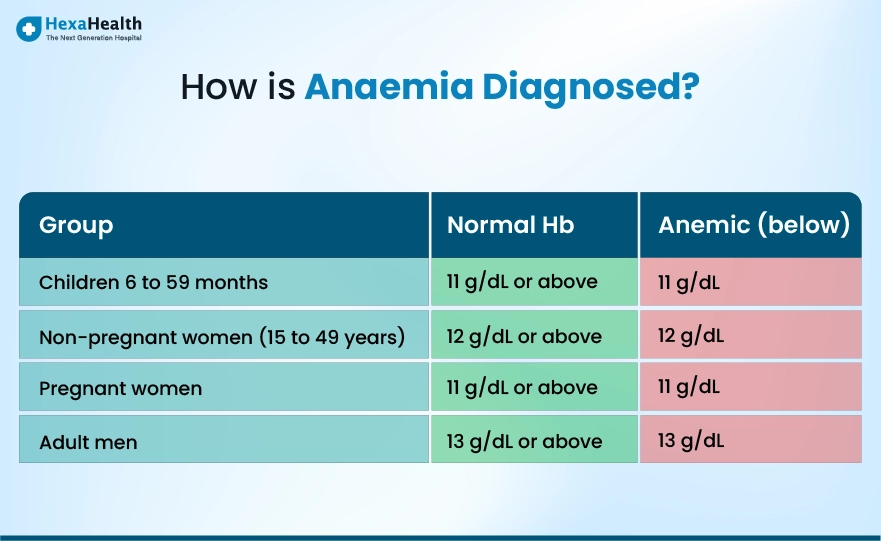
Knowing the normal haemoglobin range for pregnant women, children, and adults is important. It helps you understand your blood test results and identify anaemia.
Anaemia in India: A Severe Public Health Burden
India has been classified as having a severe public health burden of anaemia for over a decade. This affects both women and children. The World Health Organization uses this category when anaemia affects more than 40% of a population.
This is not just a historical classification. NFHS-5 (2019–21) data showed anaemia had worsened in India compared to the previous round: around 67% of children aged 6 to 59 months had anaemia, and about 57% of women of reproductive age were affected. Both figures are well above the WHO's threshold for a severe public health burden. Because NFHS-6 did not update these numbers, they remain the most recent official national estimates as of writing.
Who is Most at Risk of Anaemia?
Anaemia can affect anyone, but some people have a much higher risk of developing it. If you belong to any of the following groups, regular anaemia screening or a haemoglobin blood test may help detect low haemoglobin levels early.
Women with heavy menstrual bleeding : Higher risk of iron deficiency anaemia due to chronic blood loss.
Pregnant women : Increased iron and folate needs make anaemia during pregnancy more common.
Young children (especially under 5 years) : Rapid growth increases the risk of low haemoglobin and iron deficiency.
Teenagers, especially adolescent girls : Growth spurts plus menstruation increase the risk of iron deficiency anaemia.
Vegetarians and vegans : May be at risk of iron deficiency and/or vitamin B12 deficiency anaemia if diets are not well planned.
Older adults : More likely to develop anaemia due to chronic diseases, inflammation, or poor nutrient absorption.
Frequent blood donors : Regular blood donation can lower iron stores and haemoglobin levels over time.
Endurance athletes : Intense training may increase the risk of sports-related anaemia or iron deficiency (for example, from foot-strike haemolysis, sweating, and gastrointestinal losses).
People with coeliac disease or inflammatory bowel disease (IBD) : Poor nutrient absorption and/or intestinal blood loss can lead to iron deficiency.
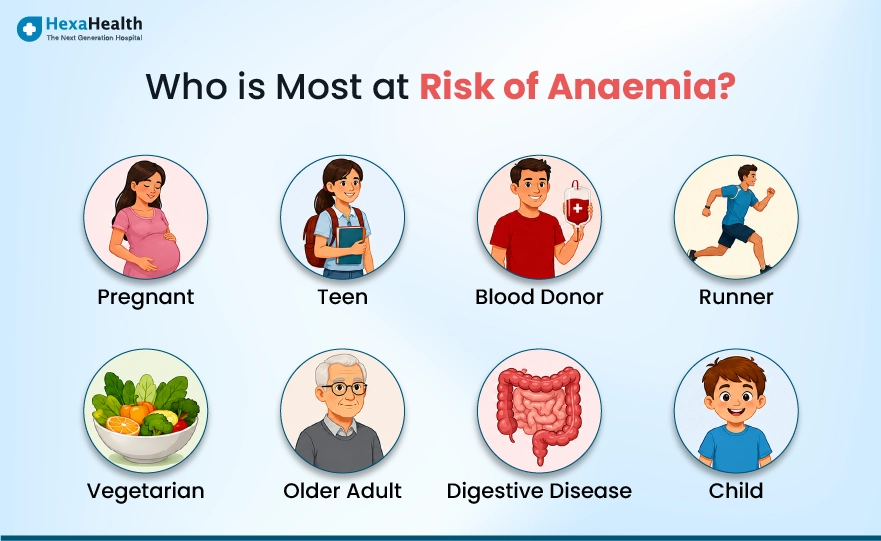
If you fall into one or more of these groups, talk to your doctor about whether a haemoglobin test or anaemia screening is right for you. Early diagnosis can help identify the cause and start the right treatment before symptoms become severe.
Why it Matters: Is Anaemia Dangerous?
Riya, a 28-year-old software engineer, assumed her tiredness came from long working hours. A routine blood test showed severe iron deficiency, caused by heavy menstrual bleeding she had never mentioned to a doctor. Her story is common. Anaemia rarely announces itself. It develops slowly, and most people adjust to feeling tired long before they think to get tested.
Left untreated, anaemia can progress from mild fatigue to serious complications, including strain on the heart, poor pregnancy outcomes, and developmental delays in children. Iron deficiency anaemia ranks among the top ten leading causes of years lived with disability in low- and middle-income countries (World Health Organization Regional Office for South-East Asia, 2017).
Watch for These Symptoms
Persistent fatigue and weakness : Ongoing tiredness that does not improve with rest or sleep.
Pale skin, lips, or inner eyelids : Loss of healthy pink colour, especially noticeable on the face and inside the eyelids.
Breathlessness on mild exertion : Getting easily out of breath while walking short distances or climbing stairs.
Dizziness or light-headedness : Feeling faint, especially when standing up quickly.
Brittle nails and increased hair loss : Nails that crack or break easily and more hair shedding than usual.
Unusual cravings for non-food items (pica) : Strong urges to eat or chew ice, chalk, dirt, or other non-food substances.
Cold hands and feet : Feeling unusually cold in the extremities even when others feel comfortable.
How Do You Prevent Anaemia? Three Things to Get Right
Anaemia prevention comes down to three things:
Eat enough iron and blood-building nutrients
Absorb them properly
Address the reason you are losing iron
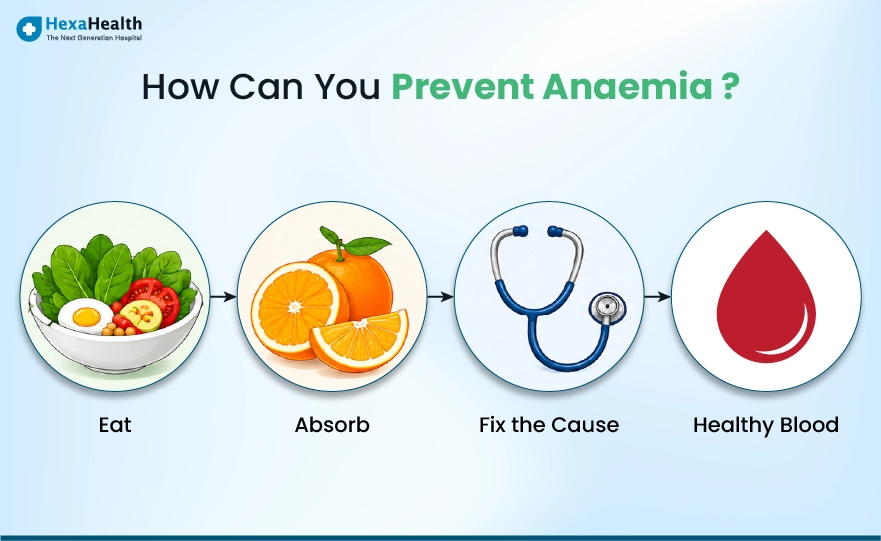
All three need attention together. Diet alone will not correct anaemia caused by an untreated infection or heavy blood loss. Supplements alone will not work if your diet is reducing iron absorption.
Eat: Nutrients That Build Red Blood Cells
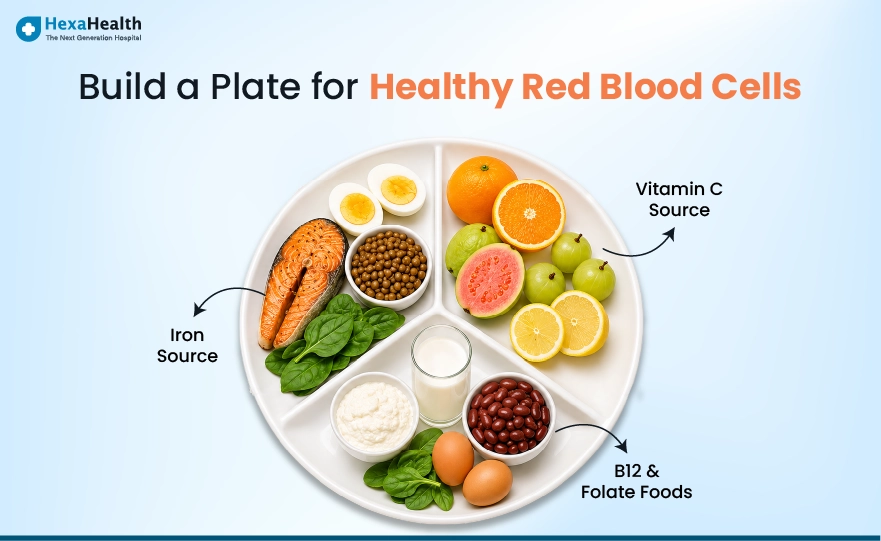
A balanced anaemia diet is the foundation of healthy haemoglobin levels. It should include iron-rich foods along with vitamin B12 and folate. If iron deficiency is confirmed through a blood test, your doctor may also recommend iron supplements.
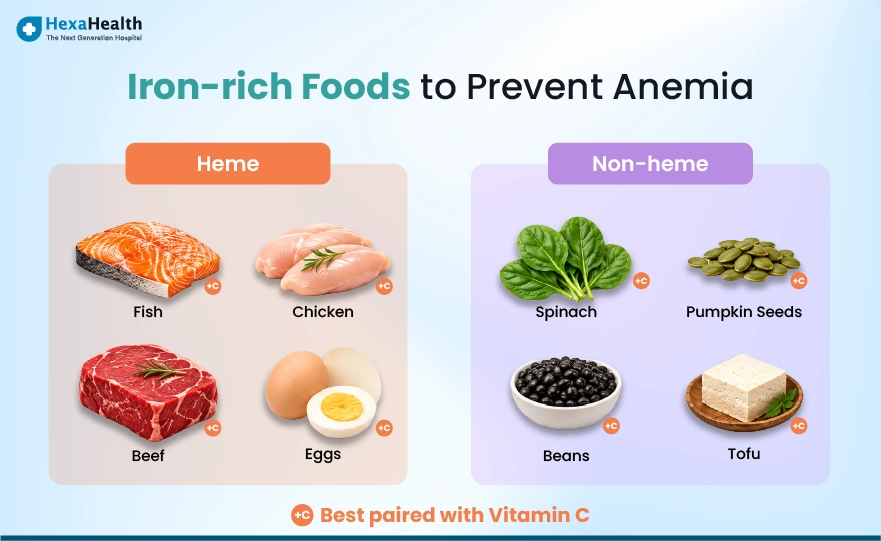
Iron-rich foods
Haem iron (more easily absorbed): Lean red meat, poultry, fish, and eggs.
Non-haem iron: Lentils, beans, spinach and other dark leafy greens, pumpkin seeds, ragi, jaggery, and iron-fortified cereals.
Vitamin B12
Needed to produce healthy red blood cells. Found in dairy products, eggs, meat, fish, and fortified plant-based milk. Strict vegetarians and vegans are at higher risk of deficiency.
Folate (Vitamin B9)
Also essential for red blood cell production. Found in dark green leafy vegetables, citrus fruits, kidney beans, and wholegrains.
Absorb: Optimise How Your Body Uses What You Eat
Eating iron-rich food is only half the equation. How you eat it changes how much iron your body actually absorbs.
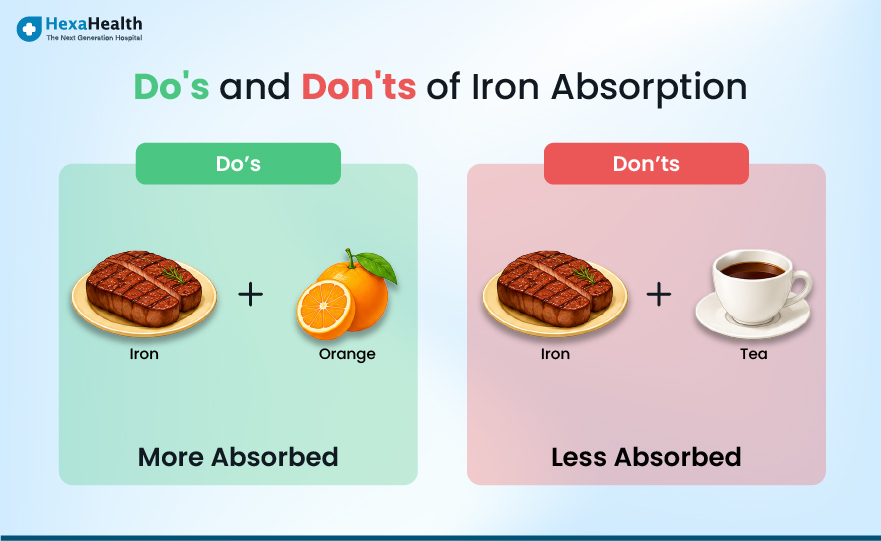
Pair iron-rich meals with vitamin C-rich foods, such as citrus fruits, tomatoes, amla, guava, or peppers
Avoid tea, coffee, and calcium-rich foods or drinks alongside iron-rich meals
Take calcium and iron supplements at different times of the day
Cook in cast-iron cookware, which can modestly increase the iron content of food
If you want to raise iron levels quickly, oral or intravenous (IV) iron may be used clinically, but only after a blood test confirms iron deficiency. Iron supplements should only be started after appropriate testing and medical advice.
Address the Underlying Medical and Environmental Causes
Prevention of iron deficiency anaemia involves more than eating iron-rich foods. Managing heavy blood loss, treating infections, maintaining good sanitation, and getting regular screening are equally important for preventing iron deficiency from developing or recurring.
Doctors generally look at four broad causes of anaemia:
Not enough iron, vitamin B12, or folate in the diet
Blood loss from periods, ulcers, haemorrhoids, or other gastrointestinal bleeding, including occult (hidden) digestive bleeding
Infections and inflammation, including malaria and intestinal worms
Inherited blood disorders, such as sickle cell disease or thalassaemia
Manage chronic blood loss : Heavy periods, ulcers, and haemorrhoids are common, treatable causes of ongoing iron loss. Anyone with heavy periods should see a doctor, as treatment may include iron supplements or hormonal contraception.
Control infections that silently drain iron : Malaria, worm infections, and chronic infections suppress red blood cell production or cause direct blood loss. Periodic deworming, especially in children and adolescents, helps reduce this risk.
Practise good water, sanitation, and hygiene : Unsafe water increases the risk of diarrhoeal disease and gut inflammation. Both reduce iron absorption. Handwashing, clean toilets, and safe drinking water are genuine anaemia prevention tools.
Get routine screening : A complete blood count (CBC) and ferritin test can detect anaemia before symptoms become severe. This is particularly important for pregnant women, endurance athletes, strict vegetarians, and people with heavy periods.
Ferritin reflects your stored iron. A level below roughly 15 ng/mL is generally considered low. Levels below 10 ng/mL suggest more advanced deficiency. Your doctor will interpret ferritin alongside your full blood results.
What to Avoid If You Have Anaemia
Managing anaemia is not just about eating more iron-rich foods. Some foods, drinks, and habits reduce iron absorption, worsen iron deficiency, or delay proper treatment.
Tea, coffee, and cocoa within an hour of iron-rich meals
Calcium supplements or dairy taken with iron-rich meals or iron tablets
High-bran cereals or large amounts of bran with iron-rich meals. Wheat itself is not the problem
Excessive alcohol
Taking iron supplements without a blood test
Ignoring heavy periods, unexplained fatigue, or blood in the stool
Raw or unwashed food and unsafe water in areas with poor sanitation
Anaemia Myths vs Facts
There are many myths about anaemia and iron deficiency that can delay diagnosis or treatment. Understanding the facts can help you recognise the symptoms, seek the correct diagnosis, and manage low haemoglobin levels effectively.
Myth: Eating spinach alone cures anaemia.
Fact: Spinach helps, but its iron is non-haem and poorly absorbed. Pair it with vitamin C and address any underlying cause.
Myth: Only women get anaemia.
Fact: Men and children can also develop anaemia, often because of diet, chronic disease, or blood loss unrelated to menstruation.
Myth: Feeling tired always means low iron.
Fact: Fatigue has many causes. Only a blood test can confirm iron deficiency.
Myth: Once you start iron tablets, you're cured immediately.
Fact: Iron stores rebuild gradually. Most people need consistent supplementation for weeks or months before haemoglobin levels improve visibly.
When Should You See a Doctor?
Most anaemia develops slowly and responds well to diet and supplements. However, some symptoms require urgent medical attention rather than a wait-and-see approach.
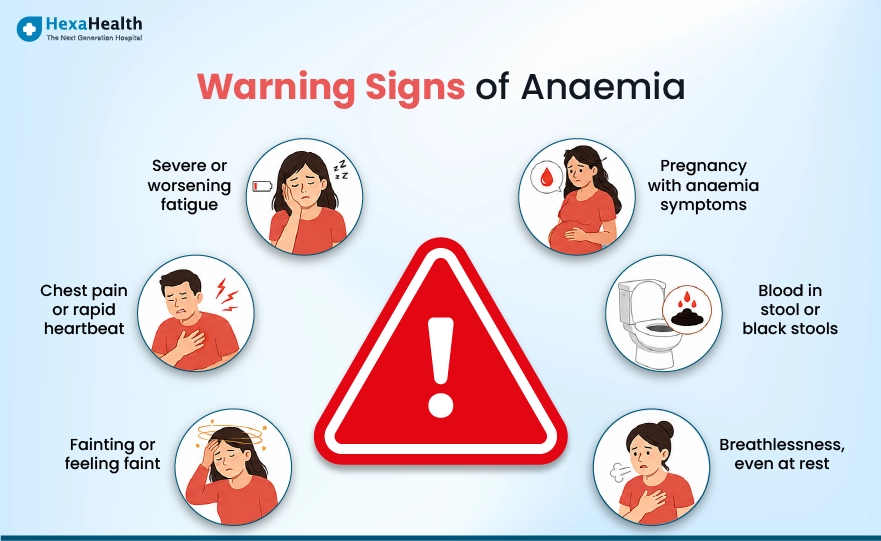
See a doctor promptly if you notice:
Severe or worsening fatigue that affects daily activities
Chest pain or a racing heartbeat
Fainting or near-fainting episodes
Pregnancy combined with any symptoms of anaemia
Blood in the stool or unusually dark, tarry stools
Breathlessness even at rest
A Practical One-Day Iron-Rich Meal Plan
Following an iron deficiency anaemia diet is one of the most effective ways to restore iron stores and maintain healthy haemoglobin levels. Pairing iron-rich foods with vitamin C-rich foods improves iron absorption and supports healthy red blood cell production.
Breakfast: Ragi porridge with an orange or guava
Mid-morning: A handful of soaked almonds
Lunch: Rajma or lentils, spinach sabzi, and a side of tomato salad
Evening snack: Roasted chana or pumpkin seeds
Dinner: Grilled fish or a paneer and dark leafy green curry with a squeeze of lemon
Keep tea and coffee at least an hour away from these meals to maximise iron absorption.
India's National Framework: The Anemia Mukt Bharat 6×6×6 Strategy
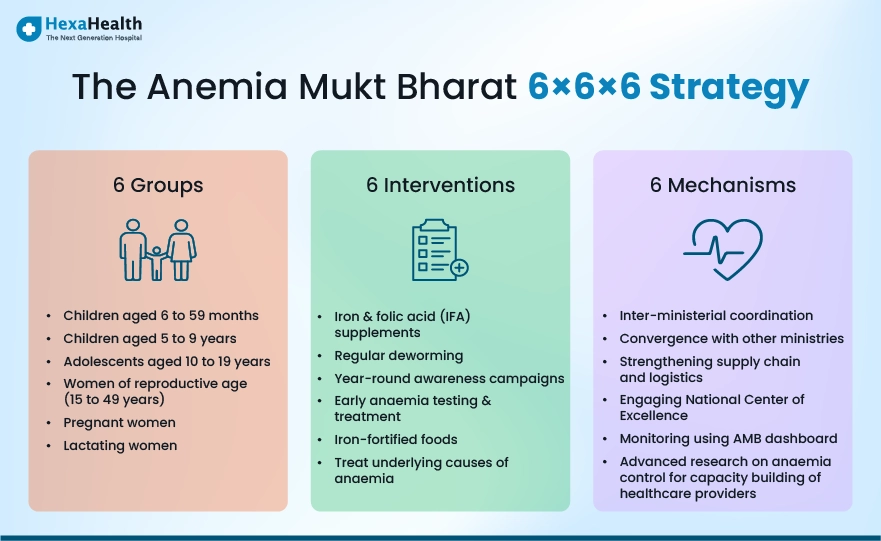
India runs the world's largest anaemia reduction programme — Anaemia Mukt Bharat (AMB) — launched by the Ministry of Health and Family Welfare. Its structure also serves as a useful checklist for individual prevention.
Six Target Groups
Children aged 6 to 59 months
Children aged 5 to 9 years
Adolescents aged 10 to 19 years
Women of reproductive age (15 to 49 years)
Pregnant women
Lactating women
Six Interventions
Prophylactic iron and folic acid (IFA) supplementation
Periodic deworming
Intensified year-round behaviour change communication campaign
Testing of anaemia using digital invasive haemoglobinometer and point of care treatment
Mandatory provision of iron and folic acid fortified foods in public health programmes
Addressing non-nutritional causes of anaemia in endemic pockets
Six Institutional Mechanisms
The Anaemia Mukt Bharat programme is supported by six institutional mechanisms designed to ensure effective implementation at every level.
At the policy level, inter-ministerial coordination ensures that health, nutrition, and welfare departments work toward a unified goal, supported by active convergence with other ministries to align resources and avoid duplication. On the supply side, strengthening the supply chain and logistics ensures that iron and folic acid supplements reach beneficiaries without interruption across all geographies.
At the knowledge and capacity end, the programme engages the National Center of Excellence to drive evidence-based decision-making, while advanced research on anaemia control is used specifically to build the capacity of healthcare providers on the ground. Finally, all programme activity is tracked and evaluated through monitoring using the AMB dashboard, enabling real-time oversight and course correction at the national level.
Preventing Anaemia in Pregnancy
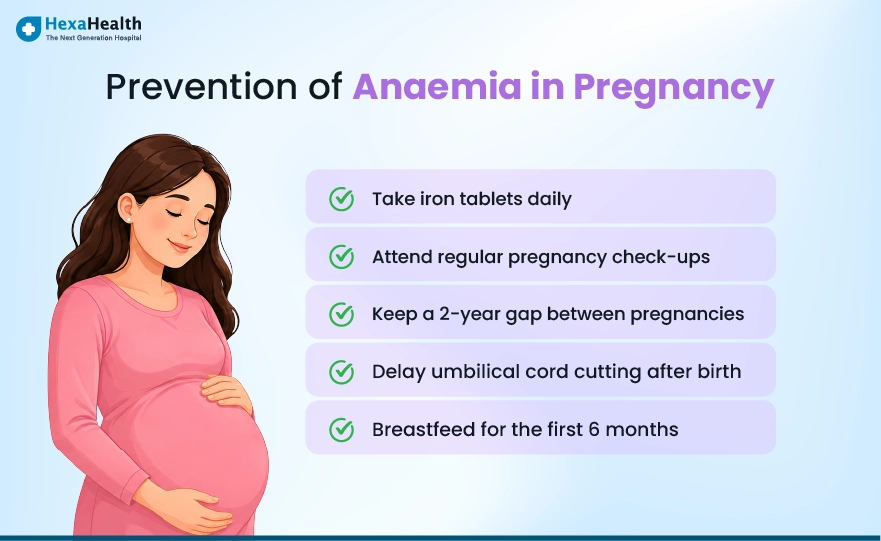
Prevention of anaemia in pregnancy requires additional care because iron needs increase as blood volume expands and the baby depends on the mother's iron stores. Daily iron and folic acid supplementation, regular antenatal check-ups, and healthy birth spacing are key preventive measures.
Iron and folic acid supplementation : Daily IFA tablets, following WHO dosage guidelines, are standard in Indian antenatal care.
Early and regular antenatal screening : Anaemia should be checked at the first antenatal visit and monitored throughout pregnancy.
Birth spacing : Waiting at least 24 months between pregnancies gives the body time to rebuild depleted iron stores.
Delayed umbilical cord clamping : Waiting at least one minute after birth improves a newborn's iron stores.
Exclusive breastfeeding for six months : Breast milk iron is highly bioavailable, and breastfeeding also naturally supports birth spacing.
Anaemia during pregnancy is linked to a significant proportion of maternal deaths in the region. This is why the WHO places it at the centre of national anaemia prevention strategies (World Health Organization Regional Office for South-East Asia, 2017).
Preventing Sickle Cell Anaemia
Prevention of sickle cell anaemia differs from nutritional anaemia because the condition is inherited. It focuses on carrier screening, genetic counselling, and newborn screening to reduce the risk of passing the condition to future generations.
Carrier screening : A blood test identifies whether someone carries the sickle cell trait.
Genetic counselling : If both partners carry the trait, each pregnancy has a 25% chance of the child having sickle cell disease.
Newborn screening : Early diagnosis allows preventive care, such as penicillin prophylaxis, to begin before complications develop.
India has an estimated 30 million sickle cell trait carriers, with a national prevalence of around 3.3%, mainly among tribal populations across central India (Dolai, 2024). In 2023, the Government of India launched the National Sickle Cell Anaemia Elimination Mission, aiming to eliminate the condition as a public health problem by 2047.
How is Anaemia Treated?
Treatment depends on the cause identified through blood tests. Broadly, it follows three approaches:
Correcting nutritional deficiencies through dietary changes.
Oral or intravenous (IV) iron and vitamin supplementation after confirming deficiency.
Treating the underlying cause, such as bleeding, infection, or a chronic medical condition.
For inherited disorders such as sickle cell disease or thalassaemia, treatment focuses on long-term disease management. See our dedicated guide on anaemia treatment for more information.
Conclusion
Most anaemia develops gradually, which is exactly why it is easy to overlook. The earlier iron deficiency is detected, the easier it is to treat.
If you have been feeling unusually tired, breathless, or light-headed, do not guess the cause. A simple blood test can often provide the answer and guide the right next step in a single visit.
Prevention begins long before symptoms appear. Knowing your haemoglobin and ferritin levels today can help prevent more serious health problems tomorrow.
Quick Summary
Eat iron-rich foods with vitamin C
Keep tea and coffee away from iron-rich meals
Treat heavy periods or other causes of blood loss
Get a CBC and ferritin test if you have symptoms
Do not self-medicate with iron supplements
Frequently Asked Questions
What is anaemia?
Anaemia is a condition in which your body does not have enough healthy red blood cells or haemoglobin to carry adequate oxygen to its tissues. As a result, you may experience fatigue, weakness, pale skin, and breathlessness.
Iron deficiency is the most common cause worldwide. However, anaemia can also develop due to vitamin B12 or folate deficiency, chronic diseases, blood loss, or inherited conditions such as thalassaemia.
How can you increase iron in the body?
You can increase iron levels by eating iron-rich foods such as red meat, poultry, fish, lentils, beans, spinach, and fortified cereals. Pairing plant-based iron sources with vitamin C-rich foods improves iron absorption.
Avoid drinking tea or coffee immediately after meals because they reduce iron absorption. If diet alone is not enough, your doctor may recommend iron supplements. Always take iron supplements under medical supervision.
How can you increase red blood cells?
Healthy red blood cell production depends on adequate iron, vitamin B12, and folate intake. Eating foods rich in these nutrients supports normal red blood cell formation.
Treating the underlying cause of anaemia is equally important. This may include managing nutrient deficiencies, chronic diseases, or blood loss. Some people may require medicines that stimulate red blood cell production. Rarely, blood transfusions may also be necessary.
Is anaemia dangerous?
Yes, anaemia can be dangerous depending on its severity and cause. Mild anaemia usually causes fatigue and reduced stamina. Severe or untreated anaemia can place extra strain on the heart.
It may also increase the risk of pregnancy complications. In some cases, anaemia may lead to heart failure. Persistent anaemia can also indicate an underlying medical condition. Medical evaluation is important if symptoms continue.
What should you eat for iron deficiency?
Include haem iron sources such as red meat, poultry, fish, and shellfish whenever possible. Plant-based sources include lentils, chickpeas, tofu, spinach, pumpkin seeds, and fortified cereals.
Pair iron-rich foods with vitamin C-rich foods such as oranges, peppers, or strawberries. This helps improve iron absorption. Avoid tea, coffee, and calcium-rich foods around iron-rich meals because they reduce iron absorption.
What is the WHO classification of anaemia?
The World Health Organization classifies anaemia using haemoglobin levels. Adult men are considered anaemic below 13 g/dL. Non-pregnant women are considered anaemic below 12 g/dL.
Pregnant women are considered anaemic below 11 g/dL. Children aged 6 months to 5 years are considered anaemic below 11 g/dL. The WHO further classifies anaemia as mild, moderate, or severe based on haemoglobin levels.
How is anaemia treated?
Treatment depends on the underlying cause of anaemia. Iron-deficiency anaemia is treated with dietary changes and iron supplements when needed. Vitamin B12 or folate deficiency requires appropriate supplementation.
Anaemia caused by chronic disease improves by treating the underlying condition. Severe anaemia may require blood transfusions or erythropoietin therapy. A proper diagnosis is essential before starting treatment.
How can you increase iron levels quickly?
Iron-rich foods and vitamin C can help improve iron levels. However, dietary changes take time to show results. Doctors may prescribe oral iron supplements for faster improvement. Some people may need intravenous iron infusions. There is no instant cure for iron deficiency. Most people require several weeks or months of treatment.
How can you prevent anaemia?
Preventing anaemia starts with eating a balanced diet rich in iron, vitamin B12, and folate. Heavy menstrual bleeding and other causes of chronic blood loss should be treated promptly.
People at higher risk should have regular haemoglobin screening. This includes pregnant women, vegetarians, frequent blood donors, and people with chronic illnesses. Treating gastrointestinal diseases and malabsorption disorders early also helps reduce the risk of anaemia.
Does anaemia cause weight loss?
Anaemia itself does not usually cause weight loss directly. However, unexplained weight loss together with anaemia may indicate an underlying medical condition. These conditions include gastrointestinal diseases, cancer, or chronic inflammatory disorders. If you experience both symptoms, consult a doctor for further evaluation.
Does anaemia affect periods?
Yes, anaemia and menstrual periods can affect each other. Heavy menstrual bleeding is one of the most common causes of iron-deficiency anaemia in women.
Anaemia may also contribute to lighter or irregular periods in some cases. If you have heavy or irregular periods along with fatigue, speak to your doctor about checking your iron levels.
Can anaemia go away naturally?
Mild dietary anaemia can improve with consistent iron-rich eating, but most cases recover faster and more reliably with medical guidance, especially if an underlying cause such as heavy bleeding is involved.
Can anaemia cause dizziness or headaches?
Yes. Because anaemia reduces the oxygen-carrying capacity of the blood, some people experience headaches, dizziness, or light-headedness, especially during physical activity or when standing up quickly.
Can anaemia cause anxiety?
Yes. Anaemia can cause symptoms such as a racing heartbeat, fatigue, dizziness, and difficulty concentrating. Some people mistake these symptoms for anxiety. They may also worsen existing anxiety.
Can low iron make you sleepy?
Yes. Fatigue and excessive sleepiness are among the most common symptoms of iron deficiency because your body's tissues are not getting enough oxygen.
Can anaemia cause hair loss?
Yes. Iron deficiency is a well-documented cause of hair thinning and hair loss because hair follicles need iron to grow properly.
How long does iron take to work?
Many people start feeling better within a few weeks. However, rebuilding iron stores usually takes several months. Treatment should continue exactly as advised by your doctor.
Can vegetarians prevent anaemia?
Yes, with careful planning. Vegetarians should focus on non-haem iron sources such as lentils and leafy greens. They should pair these foods with vitamin C-rich foods. They should also consider vitamin B12 supplements or fortified foods.
What is a dangerously low ferritin level?
Ferritin below roughly 15 ng/mL is generally considered low. Levels below 10 ng/mL indicate more advanced iron deficiency. However, a doctor should always interpret ferritin alongside your full blood results.
Can anaemia be cured permanently?
Nutritional anaemia can often be fully corrected once the underlying cause is treated. This may include poor diet, heavy bleeding, or an infection.
Anaemia can return if the cause recurs or dietary habits change. Regular screening remains important even after iron levels return to normal. Inherited conditions such as sickle cell disease or thalassaemia require long-term management rather than a cure.
What is the 6×6×6 strategy for anaemia?
The 6×6×6 strategy is the framework behind India's Anemia Mukt Bharat programme. It targets six beneficiary groups through six key interventions, including iron and folic acid supplementation and haemoglobin testing. These interventions are delivered through six institutional mechanisms. The programme has since expanded into a 7×7×7 framework.
References
All the articles on HexaHealth are supported by verified medically-recognized sources such as; peer-reviewed academic research papers, research institutions, and medical journals. Our medical reviewers also check references of the articles to prioritize accuracy and relevance. Refer to our detailed editorial policy for more information.
- Dolai, T. (2024). Sickle cell prevalence in the universe problem in 2024. Journal of Hematology and Allied Sciences, 4, 1-2.

- Ministry of Health and Family Welfare, Government of India. (2024). National Family Health Survey-6 (2023-24). National Health Mission. (n.d.). Anemia Mukt Bharat
- World Health Organization. (2025). Anaemia. Fact sheet.
Last Updated on: 1 August 2026
Disclaimer: The information provided here is for educational and learning purposes only. It doesn't cover every medical condition and might not be relevant to your personal situation. This information isn't medical advice, isn't meant for diagnosing any condition, and shouldn't replace talking to a certified medical or healthcare professional.
Reviewer

Dr. Aman Priya Khanna
MBBS, DNB General Surgery, FMAS, FALS Bariatric, MNAMS General Surgery, FIAGES
14 Years Experience
Dr Aman Priya Khanna is a leading National Board-certified Laparoscopic, GI, and Bariatric Surgeon in Ahmedabad with 14+ years of experience and over 4,500+ successf...View More
Author

With over 6 years of experience in content creation, branding, and social media marketing, she creates audience-focused content that drives engagement and strengthens digital presence. For the past 4 years, she has...View More

 Open In App