

 Chat with Cataract Expert
Best Cataract (IOL) Lens in Pune
Best Cataract (IOL) Lens in Pune
 Clear Vision
No Glasses Required
Lifetime Results
All Premium Lens
Get Now, Pay Later
Frequently Asked Questions
What is a Cataract?
Cataract, also known as Motiyabind, refers to the development of a cloudy white area around the lens of the eyes, thus affecting the vision.
 Chat with Cataract Expert
Can cataract lenses correct astigmatism?
Yes, certain types of cataract lenses can correct astigmatism. These lenses are called toric lenses and are designed to address the cornea's irregular shape that causes astigmatism.
During cataract surgery, your eye surgeon will measure the degree of astigmatism in your eye and determine the appropriate toric lens power and placement. The toric lens is then implanted in the same way as a standard intraocular lens.
Toric lenses can provide clear vision at a distance, but you may still need glasses for reading or other close-up work. Your eye surgeon can help you determine if a toric lens is appropriate for you and discuss the benefits and risks of this type of lens.
What is the difference between standard and premium cataract lenses?
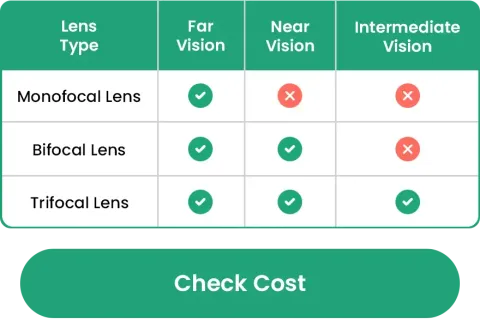
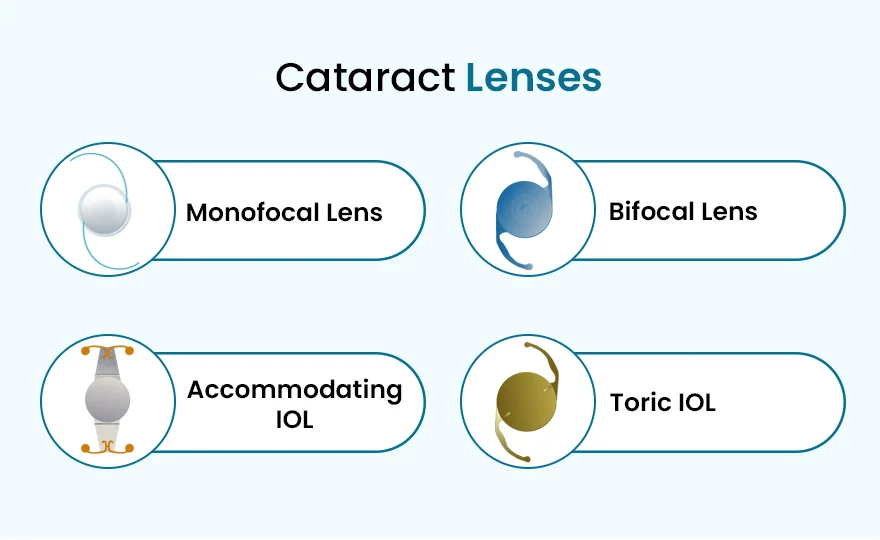
Standard Lens (Conventional IOL) allows you to focus clearly at one distance only. Typically, patients would choose to have the doctor aim for the best distance vision with the understanding that glasses would still be needed for close work, such as reading.
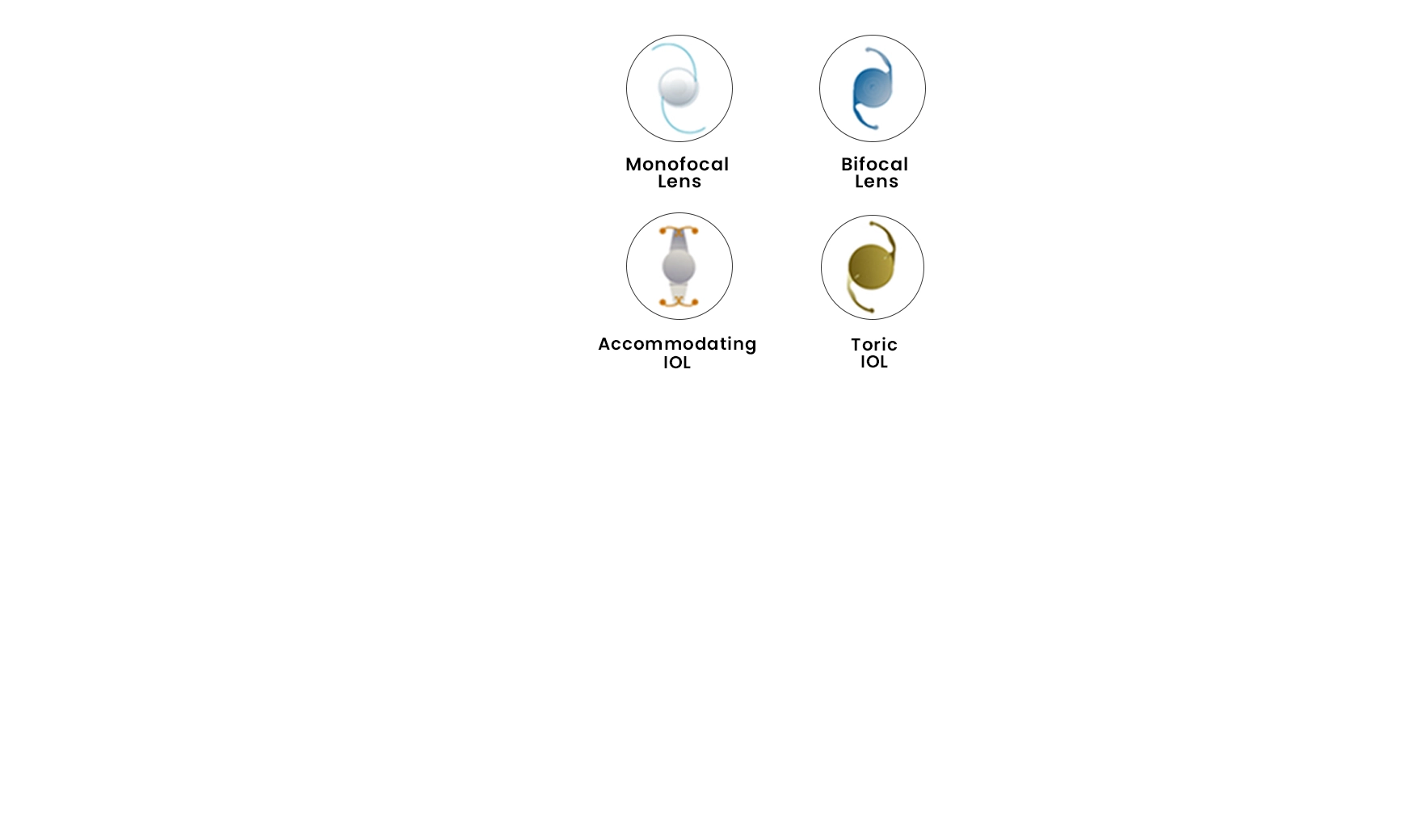
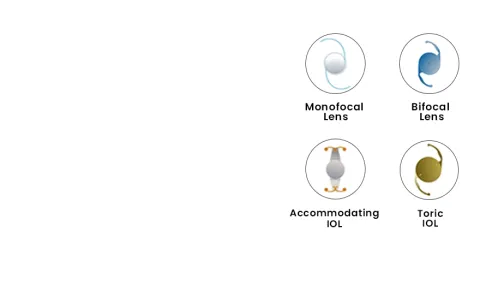
Premium Lens can provide good distance, intermediate and near vision. The dependency on glasses is minimised, including reading glasses or bifocals. Premium lenses can be slightly more expensive than standard lenses. Toric, Accommodating and Multifocal lenses are broad categories of premium lenses.
What are some of the top brands for cataract lens?
Several top Indian and International brands for cataract lenses, also known as intraocular lenses (IOLs). Some of the most popular and reputable lenses include:
- Alcon: AcrySof IQ, AcrySof Toric and PanOptix Trifocal lenses.
- Johnson & Johnson Vision: Tecnis, Tecnis Symfony, Tecnis Toric, and Tecnis Multifocal lenses.
- Abbott: Symfony
- Alcon: PanOptix
- ClarVista: Clariti
- Bausch + Lomb: enVista and Crystalens IOLs
- Zeiss
- Rayner
Will I still need glasses after cataract lens surgery?
The need for glasses after cataract lens surgery depends on several factors, including the type of lens you choose and your visual needs.
If you choose a standard monofocal lens with a single focal point, you will likely need glasses for reading or other close-up work. Some people also need glasses for distance vision after surgery with a monofocal lens.
Premium lenses, such as multifocal, accommodating, or extended depth of focus lenses, are designed to provide clear vision at multiple distances, reducing the need for glasses. However, these lenses may only be appropriate for some, and some people may still need glasses for some tasks or in certain lighting conditions.
If you have astigmatism, a toric lens can correct this condition, but you may still need glasses for some tasks or in certain lighting conditions.
Discussing your visual goals and needs with your eye surgeon before cataract surgery is important. Your surgeon can help you choose the typ
How much do cataract lenses cost?
The cost of cataract lenses can vary depending on several factors:
- The type of lens, whether the standard or premium lens
- The brand,
- Medical condition like stage and grade of cataract, and vision affected whether distance or near or cylindrical.
- Whether you have insurance coverage.
Choosing the Right Cataract Lens
Visual needs like Astigmatism
Eye health and cataract severity
Specific need of glasses
Lens cost: premium or standard
Hobbies like driving or reading etc.
Our Top Doctors

Dr Jatin Ashar
Ophthalmologist / Eye Surgeon, Cataract and Refractive Surgeon

20 Years
Experience

100%
Positive Reviews
49 Patients already consulted this week
Dr Saumil Sheth
Ophthalmologist / Eye Surgeon
23 Years
Experience
99%
Positive Reviews
35 Patients already consulted this week

Dr Sameer Kaushal
Ophthalmologist / Eye Surgeon, Cataract and Refractive Specialist
22 Years
Experience
100%
Positive Reviews
31 Patients already consulted this week



Dr Vishal Maniar
Ophthalmologist / Eye Surgeon
18 Years
Experience
99%
Positive Reviews
51 Patients already consulted this week

Dr Anshumali Mishra
Ophthalmologist and Eye Specialist
13 Years
Experience
99%
Positive Reviews
54 Patients already consulted this week
Why Choose HexaHealth for Cataract Treatment?
 Trusted Cataract Specialist
Best Ophthalmology Centers
Top Eye Lens Brands Available
Personalized Care Assistance
Insurance and Paperwork
Risks of Delay in Cataract Treatment
- Progression of Cataract
- Poor Vision in Low Light
- Risk of Fall and Fractures
- Pressure in Eye Increases
- Irreversible Loss of Vision
What our Patients Say

Reviews
4.8

(3,222 Reviews)
About Cataract Lenses
Cataract Lenses, or Intraocular Lenses (IOLs), are artificial lenses implanted in the eye during cataract surgery to replace the natural lens that has become cloudy or opaque due to cataracts.
Cataract lenses are made of a biocompatible material, typically acrylic or silicone, and are designed to remain in the eye permanently. They come in different shapes, sizes, and powers to match the individual needs of each patient.

Treatment Cost Depends On

Type of
Procedure

Severity of
the Disease

Past Medical
Condition

Contact
for exact cost